Manufacturing Process of CTIA’s MHC Alloy
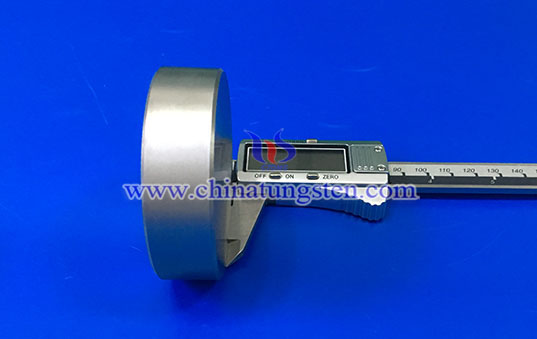
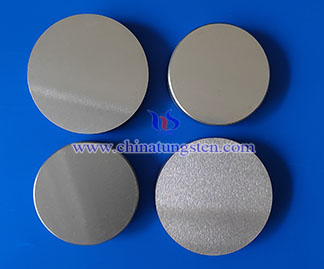
MHC alloy (Molybdenum Hafnium Carbon Alloy) is a typical molybdenum-based in-situ dispersion-strengthened high-temperature alloy. Its manufacturing process strongly depends on powder metallurgy purity control, HfC second-phase precipitation behavior, and thermomechanical microstructure regulation. With nearly 30 years of manufacturing experience, CTIA has established a full-process control system from raw material purification to thermomechanical shaping, achieving coordinated optimization of composition uniformity and high-temperature microstructural stability.
Manufacturing Process of CTIA’s MHC Alloy
(1) High-Purity Raw Material Selection and Purification Control
High-purity molybdenum powder (Mo ≥99.95%) is used. Hafnium sources are typically HfH₂ or reduced HfO₂ powders, and carbon sources are high-purity graphite or carbon black. Impurities such as Fe, Ni, and Si are controlled below 100 ppm, while oxygen is maintained at 50–100 ppm to reduce oxide inclusions affecting creep resistance.
(2) Precision Batching and High-Energy Mixing
The composition is controlled at Mo (98.5–99.0%), Hf (1.0–1.2%), and C (0.05–0.15%). High-efficiency blending ensures uniform dispersion and compositional consistency. Mixing time is typically 6–24 hours. Particle size is controlled at D50 ≈ 2–10 μm to improve sintering homogeneity and stability.
(3) Cold Isostatic Pressing (CIP)
Compaction is performed under 200–300 MPa, achieving a density of 55%–65% of theoretical density, improving uniformity for subsequent densification.
(4) Vacuum High-Temperature Sintering and In-Situ HfC Formation
Sintering is conducted at 1700–2000°C under high vacuum (≤10⁻³ Pa) or hydrogen atmosphere. The key reaction occurs:
Hf + C → HfC
Nano- to submicron-sized HfC particles (50–500 nm) are formed and uniformly dispersed in the Mo matrix, providing Zener pinning and dislocation blocking.
(5) Thermomechanical Processing
Plastic deformation is carried out at 1200–1600°C with a deformation ratio of 40%–80%. Dynamic recrystallization refines grain structure, increases density, and improves high-temperature isotropy.
(6) Stress Relief Annealing and Dimensional Finishing
Annealing at 1000–1400°C eliminates residual stress, improves dimensional stability, and optimizes grain orientation distribution.
(7) Non-Destructive Testing and Full Quality Control
Ultrasonic Testing (UT), metallographic analysis, SEM/EDS phase analysis, and ICP-OES composition testing are used. Final density reaches ≥99%, ensuring uniform microstructure and consistent HfC dispersion.
Manufacturing Process Flow of CTIA's MHC Alloy
The manufacturing process of CTIA's MHC alloy mainly includes key steps such as high-purity raw material preparation, precise batching and uniform mixing, vacuum sintering with in-situ HfC generation, cold isostatic pressing, thermomechanical processing, stress relief annealing, and inspection with quality control. These ensure uniform microstructure, stable performance, and consistent dimensional accuracy. The manufacturing process flow of CTIA's MHC alloy is shown in the picture below:

CTIA’s MHC alloy manufacturing process integrates full control from raw material purity and composition uniformity to in-situ HfC dispersion formation and thermomechanical regulation, achieving optimized high-temperature strength, creep resistance, and structural stability. The system ensures reliable performance under ultra-high temperature, long-term service, and high-load conditions, making it suitable for high-end dies, vacuum thermal systems, and aerospace structural applications.
For any inquiry, please contact molybdenum and molybdenum alloy manufacturer: CTIA GROUP
Email: sales@chinatungsten.com
Tel: 0086 592 5129696 / 0086 592 5129595
Website: www.molybdenum.com.cn
WeChat:

Related Products: